Can a Machine Be Creative? Rethinking Human Uniqueness in the GenAI Era – Chanakya University
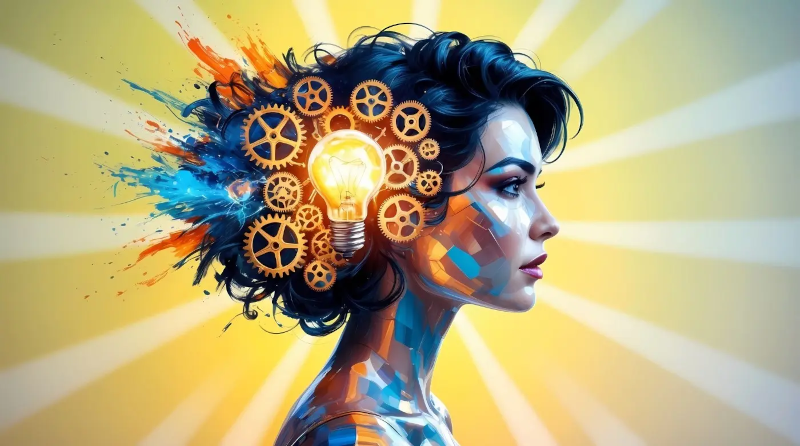
Artificial Intelligence (AI) is no longer limited to calculations or automation. With the rise of Generative AI (GenAI), machines can now write stories, compose music, design buildings, and even create artwork. This major shift has led many to ask an important question — Can a machine truly be creative?
At Chanakya University, students studying B Tech Computer Engineering and related fields explore how AI is transforming the boundaries between human and machine intelligence. GenAI is not just changing technology; it’s also reshaping how creativity is defined in the modern world.
1. What is Generative AI?
Generative AI refers to advanced machine learning systems that can produce new content — such as text, code, images, and videos — based on the data they have learned. These systems use neural networks that mimic human brain functions to generate original results.
Students studying B Tech CSE subjects learn the technical foundation of GenAI, including algorithms, data processing, deep learning, and natural language models. This helps them understand how machines “learn” from patterns and create outputs that appear human-like.
2. How Do Machines Create?
Machines do not “think” like humans, but they simulate creativity through data and prediction. GenAI models like ChatGPT or image generators are trained on millions of examples. When given a prompt, the system predicts what should come next — a word, a note, or a design element.
In B Tech Computer Engineering, students study these mechanisms in subjects like Artificial Intelligence, Machine Learning, and Neural Networks. They learn how coding, mathematics, and logic combine to create programs that can write, design, and even solve real-world problems.
3. Human vs. Machine Creativity
While AI can produce creative-looking work, it still lacks emotions, experiences, and intuition — the true sources of human creativity. Humans create from imagination, passion, and purpose, while machines depend entirely on data.
At Chanakya University, students are encouraged to use AI as a creative assistant. The goal is not to replace human creativity but to enhance it through intelligent tools. This idea is deeply explored in B Tech CSE subjects, where ethical AI use and innovation go hand in hand.
4. The Future of Creativity in the GenAI Era
The future of creativity will be a collaboration between humans and machines. AI will help students design better systems, write efficient code, and create smarter solutions. However, human guidance will remain essential for imagination and moral understanding.
Through research and practical projects, Chanakya University prepares B Tech Computer Engineering students to lead this creative revolution. By mastering technical skills and ethical awareness, they can build technologies that amplify human potential.
Conclusion
Generative AI is redefining what it means to be creative. Machines can now imitate human-like creativity, but true innovation still comes from human intelligence. At Chanakya University, the integration of B Tech CSE subjects with AI and creativity ensures that students become future-ready technologists who combine logic with imagination. The GenAI era is not about replacing humans — it’s about enhancing human uniqueness with the power of technology.
Disclaimer
This article is for educational and informational purposes only. It aims to explain how Generative AI connects with creativity and technology studies. Readers are encouraged to visit Chanakya University’s official website or contact the institution for verified details about B Tech Computer Engineering programs and B Tech CSE subjects.


Comments
Post a Comment